Forklift quotes are easy to compare badly. Two proposals can show the same capacity and still describe machines with different masts, batteries, attachments, condition standards and support. Normalize the specification before comparing the number at the bottom.
Issue one application sheet
Give every dealer the load weight and dimensions, load center, lift height, aisle, surfaces, grades, dock use, attachments, hours and shifts. Require proposed deviations to be identified instead of silently substituted.
Define ready-to-work condition
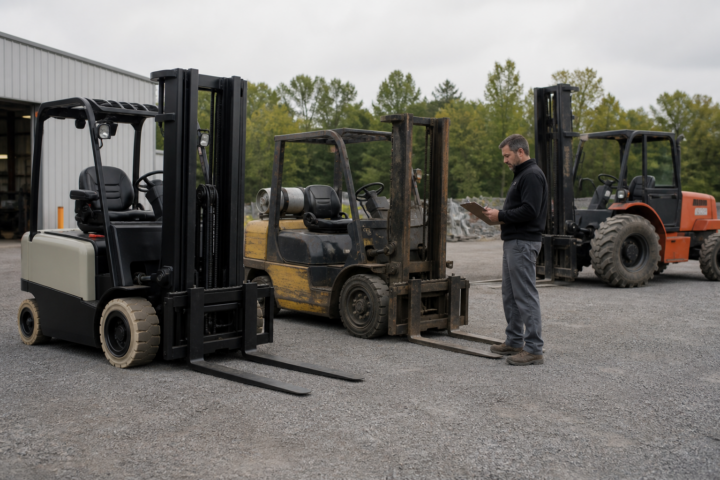
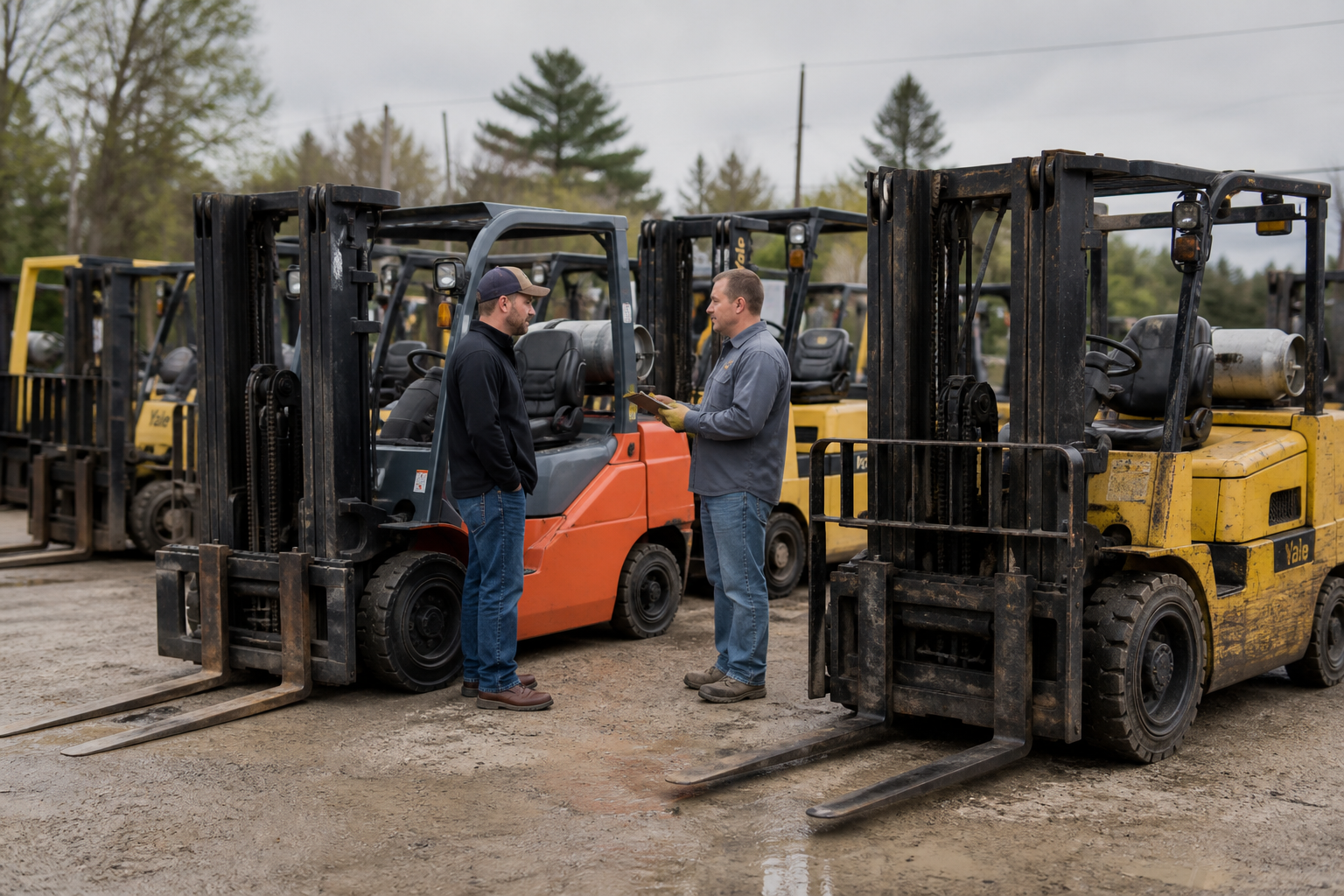
For used equipment, request year, hours, serial number, inspection findings, tire condition, battery test where relevant and included repairs. For rentals, define hour allowance, maintenance, damage responsibility and replacement process.
Add every delivered cost
Include freight, charger, propane equipment, attachments, training, taxes and planned service. Ask who performs warranty work and what response process applies in your location.
Choose the acquisition model around demand
Stable high utilization often supports ownership. Seasonal or uncertain work may fit rental. A used truck can be excellent when condition and support are documented. Compare forklift equipment options with the same operating assumptions.
Ready to compare practical options? Share the application once and compare new, used and rental options on equal terms.
Frequently asked questions
Should I send every dealer the same specification?
Yes. A common application sheet makes differences visible and reduces assumption-driven quotes.
Is the lowest forklift price best?
Only if configuration, condition, delivered scope and support are genuinely comparable.
What should a used forklift inspection include?
Controls, brakes, steering, mast, chains, forks, tires, leaks, safety devices and the power system, plus application suitability.