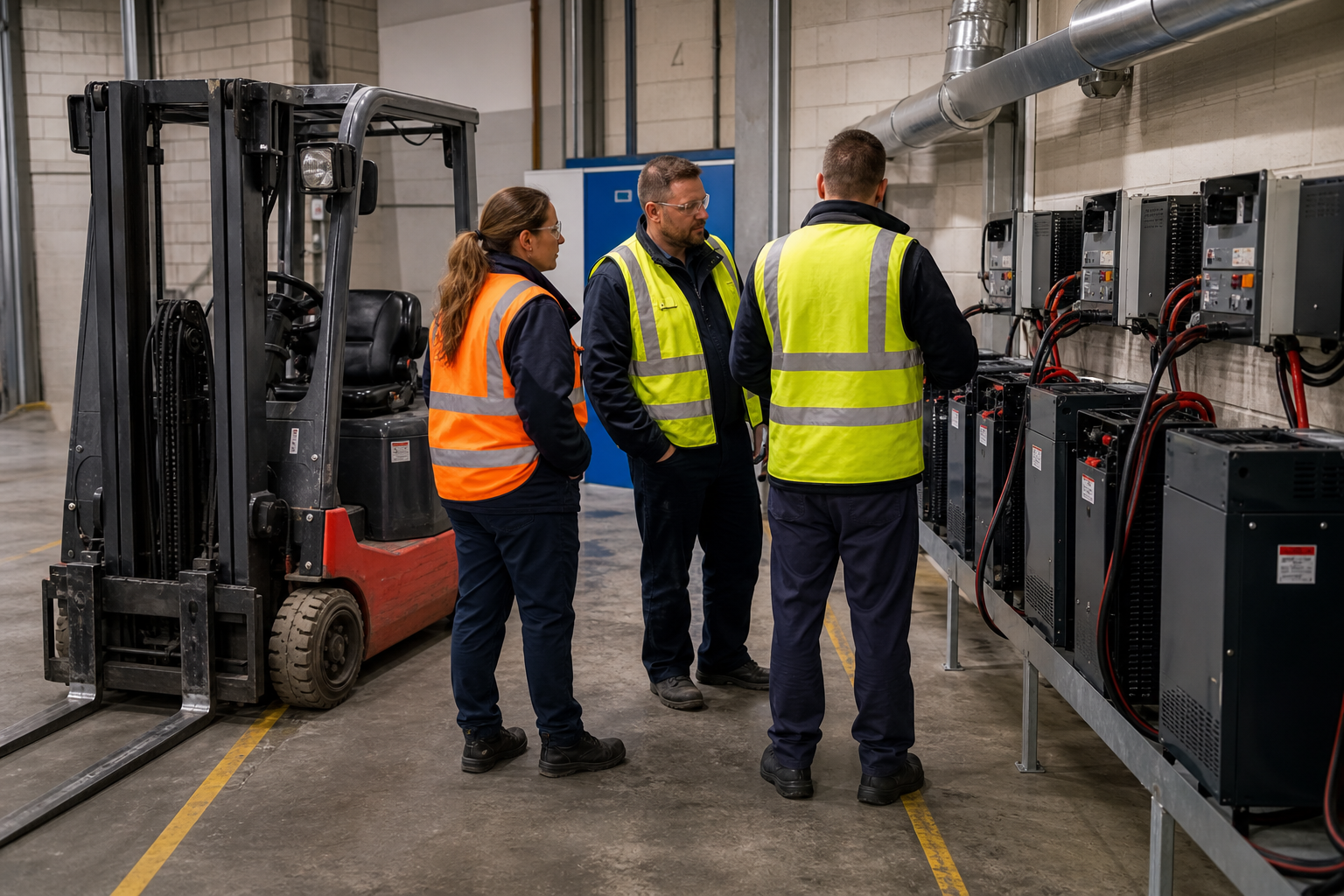
The charger price is only one line in an electric forklift project. Facilities may also need electrical distribution, protection, ventilation review, traffic controls, battery handling equipment and operating procedures.
Inventory the fleet and duty cycle
List truck voltage, battery chemistry, amp-hour capacity, connector, shifts, break windows and charge strategy. Conventional lead-acid, opportunity charging and lithium-ion systems have different infrastructure and operating needs.
Verify electrical capacity
A qualified electrician should review service capacity, panel space, voltage, phase, disconnects and code requirements. Confirm charger input rather than estimating from truck voltage.
Design a safe traffic location
Separate charging from forklift travel where practical, protect equipment from impact and preserve emergency access. Lead-acid battery areas may need eyewash, spill provisions and ventilation based on the installation and applicable rules.
Plan for growth and accountability
Leave a documented path for future chargers, cable management and energy reporting. Include operator training and inspection ownership. Compare electric forklift options with the facility plan, not after it.
Ready to compare practical options? Provide fleet size, shifts, battery types and available power to compare equipment and infrastructure together.
Frequently asked questions
Does every charger need three-phase power?
No; input requirements vary by charger. Verify the exact model and facility supply.
Do lithium-ion batteries need a charging room?
They may change ventilation and battery-handling needs, but electrical, fire-safety, traffic and manufacturer requirements still need review.
Who should design the area?
Coordinate the equipment supplier, qualified electrician, facility safety team and applicable code authorities.