The electric-versus-propane decision is rarely settled by fuel preference alone. The better choice depends on where the truck runs, how many hours it works, how quickly it must return to service and whether the facility can support charging or cylinder storage.
Start with the operating environment
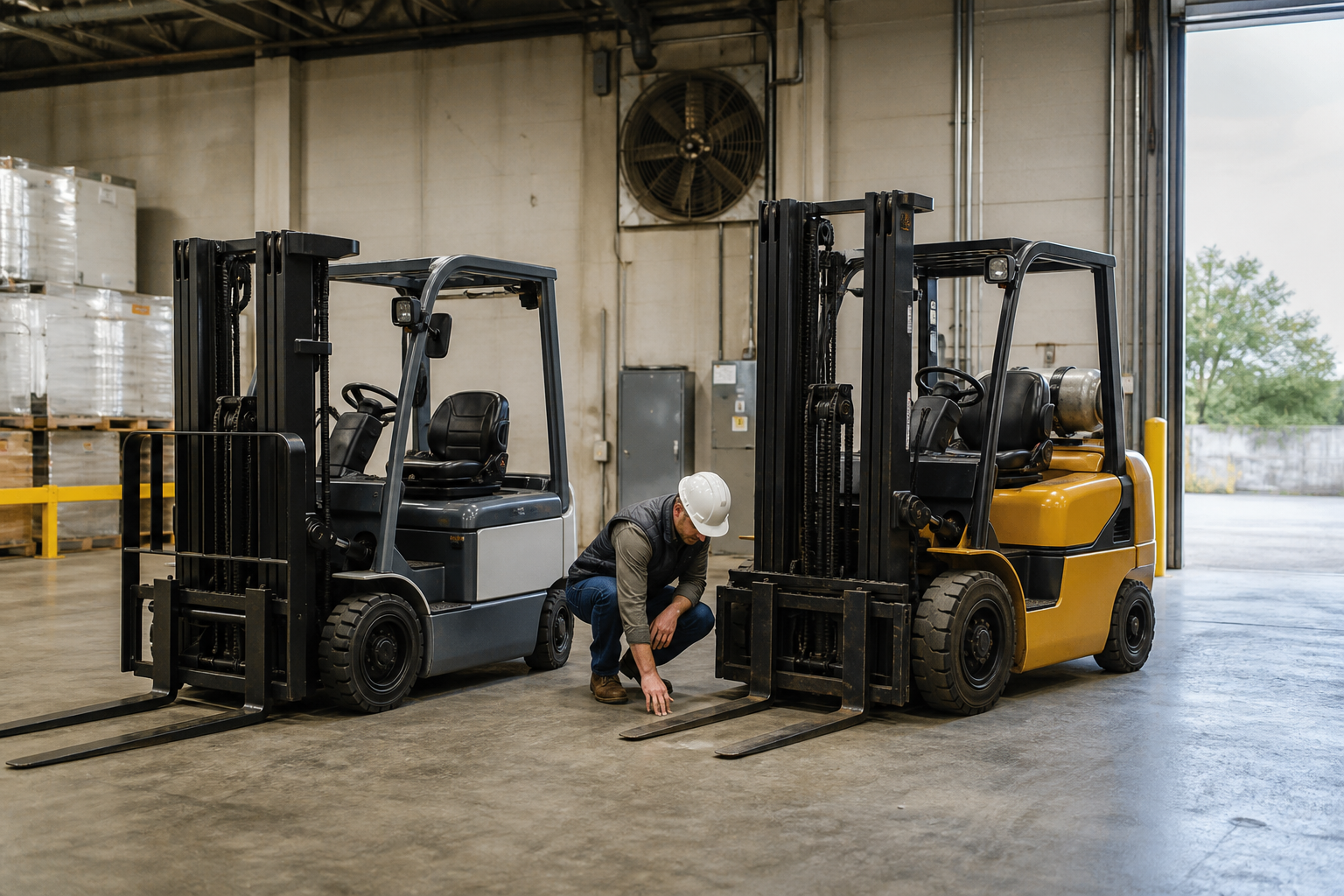
Electric forklifts produce no tailpipe emissions at the truck and are often a strong fit for warehouses, food facilities and indoor manufacturing. Propane trucks can work indoors where ventilation and site rules allow, then move outside without changing equipment. Outdoor grades, weather and long travel distances can shift the decision.
Compare duty cycle, not just shift length
Record travel time, lifting frequency, grades, attachments and idle periods. A light single-shift application may be straightforward for electric equipment. A demanding multi-shift operation needs a battery and charging plan sized for actual energy use. Propane can return to service quickly after a cylinder change, but cylinder handling, storage and supply must be managed.
Charging infrastructure changes the electric calculation
Electric equipment may require a charger, suitable electrical service, a protected charging area and operating procedures. Conventional lead-acid batteries also involve watering, ventilation and change-out planning. Lithium-ion options can support opportunity charging in some applications, though truck, battery and charger compatibility must be verified.
Propane needs a safe fuel plan
Propane avoids long charging intervals and is familiar in many mixed indoor-outdoor operations. The site still needs compliant cylinder storage, trained handling, leak checks and reliable delivery. Ventilation and carbon-monoxide controls should be evaluated under applicable workplace requirements.
Maintenance profiles are different
Electric drivetrains generally have fewer engine-related service items. Battery health and electrical components remain critical. Propane equipment adds engine oil, filters, ignition, cooling and emissions-related maintenance. Service access, technician availability and downtime should be included in the comparison.
Think about noise, heat and operator conditions
Electric trucks are typically quieter and do not add combustion exhaust at the machine. Those differences can matter in occupied facilities and temperature-controlled spaces. Propane equipment remains practical where its flexibility and rapid refueling outweigh those concerns.
Confirm capacity after the full configuration
Power source does not replace the capacity calculation. Mast height, attachment, load center and battery or chassis configuration all affect the final truck. Review electric forklifts and internal-combustion forklifts against the same application sheet.
A practical decision sequence
- Document load, lift height, aisle, surface and hours.
- Confirm indoor emissions and ventilation requirements.
- Evaluate electrical capacity and charging space.
- Evaluate propane storage, handling and supply.
- Compare delivered cost, energy, maintenance and expected downtime.
- Test the shortlisted truck in the real application when possible.
Frequently asked questions
Are electric forklifts only for light work?
No. Electric forklifts cover many capacities and demanding applications. The battery, charger and truck must be sized for the load and duty cycle.
Can propane forklifts be used indoors?
They are used indoors in many facilities, but ventilation, emissions exposure, site rules and applicable regulations must be evaluated.
Which power source costs less to operate?
It depends on energy prices, hours, charging infrastructure, maintenance, battery life and downtime. Compare the complete operating plan rather than a single fuel figure.
Union Forklift can help compare electric and propane equipment options around the actual application and delivery location.