Choosing forklift capacity by the heaviest load number alone is a common and costly mistake. A forklift’s rating applies to a defined configuration and load center. Change the load dimensions, lift height, mast or attachment and the usable capacity can change with it.
Record the maximum real load
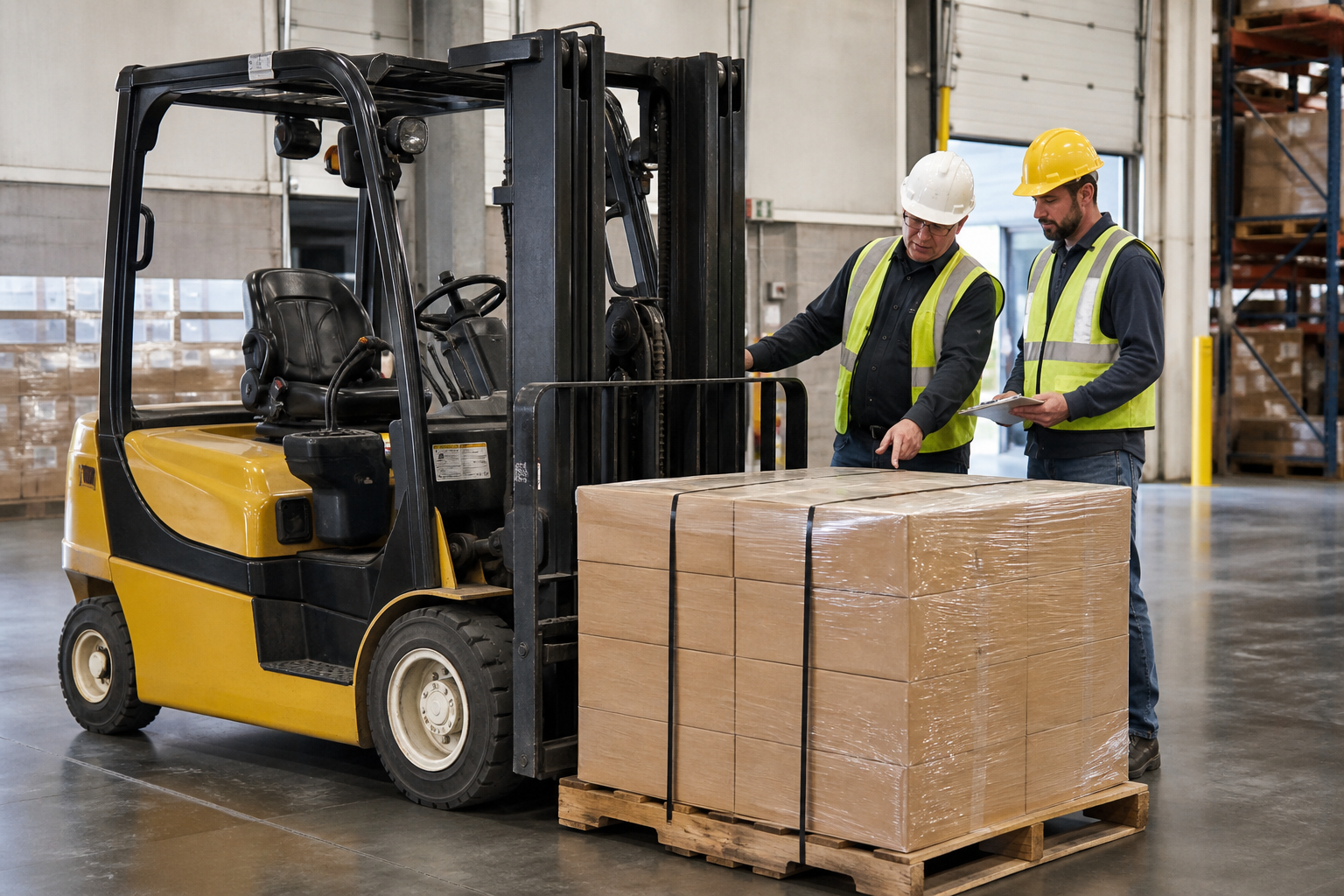
Use the heaviest normal load, not an average. Record its weight, width, depth, height and how it is supported. Include pallets, containers and attachments in the working calculation. Irregular loads need extra attention because their center of gravity may not sit at the geometric middle.
Understand load center
Load center is the horizontal distance from the fork face to the load’s center of gravity. A longer load moves the center of gravity forward and increases the overturning moment. That means a truck rated for a given weight at a 24-inch load center may not safely lift the same weight when the center is farther forward.
Account for lift height
Capacity may reduce at greater height, particularly with tall masts or demanding configurations. Record the highest placement point and the required fork height. Also measure collapsed mast height, overhead guards, doors, trailers, ceilings and sprinklers.
Include every attachment
Sideshifters, fork positioners, clamps, rotators and extensions add weight in front of the carriage and may move the load center forward. The final truck should have a capacity plate that reflects the installed attachment and mast configuration.
Do not solve every problem by oversizing
More capacity can provide necessary margin, but a larger truck may be wider, longer, heavier and less maneuverable. It can create problems with aisle width, floor loading, dock plates, elevators or trailers. The goal is a verified configuration with suitable margin—not the largest chassis available.
Check surface and stability conditions
Grades, ramps, uneven yards and soft ground affect equipment choice. Warehouse cushion-tire trucks and rough-terrain forklifts serve different operating conditions. Capacity on a data plate does not make a warehouse truck suitable for unimproved ground.
Prepare a capacity worksheet
- Maximum load weight and verified source
- Load dimensions and center of gravity
- Fork length and spacing
- Required lift height
- Mast type and collapsed height
- Every attachment and hydraulic function
- Aisle, doorway and turning clearance
- Surface, grades and floor limits
- Duty cycle and environment
Use that worksheet with the forklift buyer’s guide and during every equipment comparison. Final capacity confirmation should come from the manufacturer’s data for the exact truck configuration.
Frequently asked questions
Is a 5,000-pound forklift safe for every 5,000-pound load?
No. Load center, dimensions, height, mast and attachments can reduce usable capacity. Verify the exact configuration and capacity plate.
Do fork extensions change capacity?
They can change load position and effective load center. Use only approved extensions and verify the resulting configuration.
How much extra capacity should be purchased?
There is no universal margin. Select equipment around documented worst-case loads and obtain a configuration-specific capacity confirmation without creating avoidable clearance or floor-loading problems.
Request equipment options after collecting the real load and clearance measurements.