Rough-terrain forklift rental prices vary because the equipment covers several distinct classes, from straight-mast forklifts to telehandlers. A complete quote starts with the load, placement height, forward reach, ground conditions and delivery plan.
Straight mast or telehandler
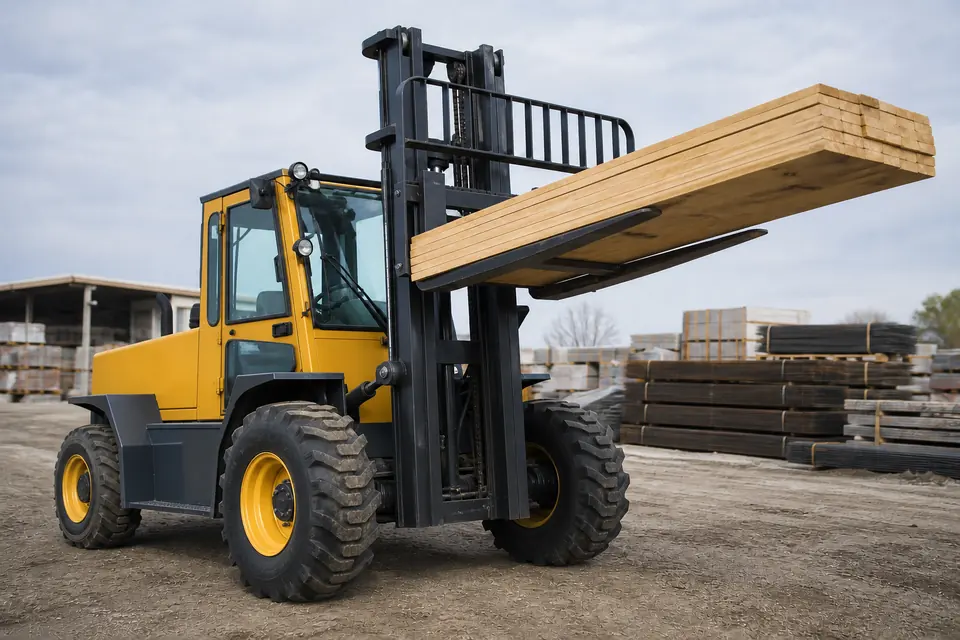
A straight-mast rough-terrain forklift lifts primarily vertically. A telehandler can place loads forward and at height, but capacity changes with boom extension and configuration. Review rough-terrain equipment before selecting a class.
Capacity at the required reach
Do not use maximum capacity as the only number. For telehandlers, consult the applicable load chart for the attachment, boom angle and extension.
Terrain and grade
Describe gravel, mud, compacted base, slopes and access routes. Rental equipment does not replace proper site preparation or operating limits.
Rental term and hours
Daily, weekly and monthly rates include different hour allowances. Compare terms using the forklift rental price guide.
Attachments
Fork carriages, buckets and other attachments change capability, price and load limits. Specify the approved attachment required.
Freight and site access
Large rough-terrain machines can carry meaningful delivery and pickup cost. Provide the ZIP code, gate width, road conditions and unloading plan when requesting rental equipment.
Frequently asked questions
Does a telehandler rental include forks?
Common configurations may, but confirm carriage, fork length and all attachments.
Are fuel and delivery included?
Terms vary. Require the quote to state fuel, freight, pickup and fees.
Can any rough-terrain forklift work on mud?
No. Soil, slope, weather and manufacturer limits must be evaluated.
Use the quote checklist to get rough-terrain forklift rental prices.