Propane and diesel forklifts overlap in some outdoor industrial applications, but they are not interchangeable. The useful price comparison includes where the truck works, how it refuels, how many hours it runs and what service the site can support.
Application and environment
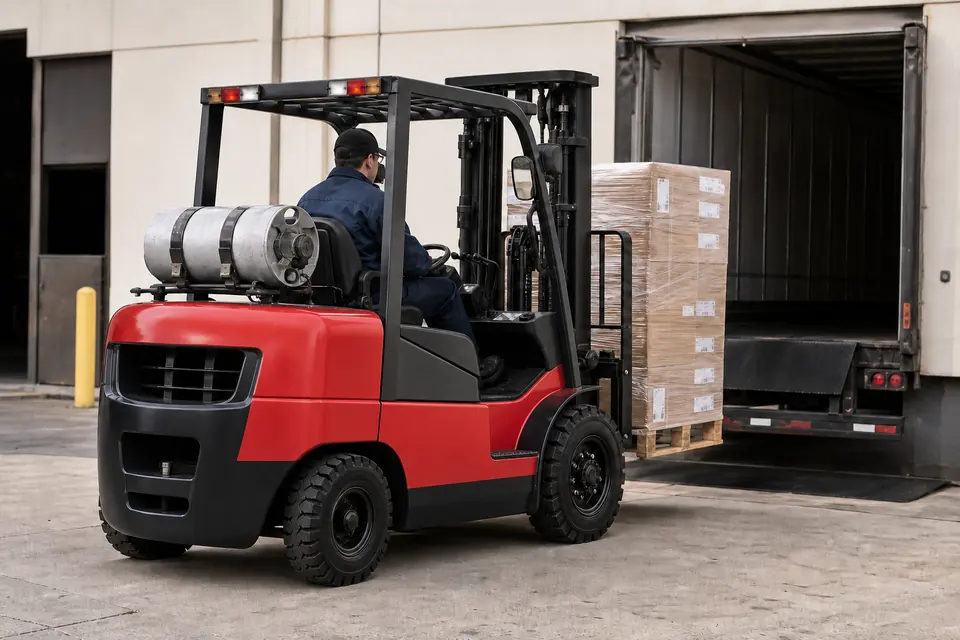
Propane is common in mixed indoor-outdoor operations where ventilation and site rules permit. Diesel is typically selected for demanding outdoor work. Review IC forklift options by surface and duty.
Initial equipment price
Capacity, mast, tires, emissions equipment, condition and attachments can outweigh the fuel choice. Compare exact configurations, not category averages.
Fuel storage and supply
Propane requires safe cylinder storage, handling and delivery. Diesel requires suitable storage or fueling access. Include site infrastructure and labor.
Runtime and refueling
Both can refuel quickly compared with conventional charging, but actual productivity depends on supply, shift pattern and operator procedures.
Maintenance
Compare engine service, filters, cooling, fuel systems and emissions components. Parts and technician access at the delivery location matter.
Tires, surface and chassis
Outdoor pneumatic-tire trucks are larger than cushion-tire warehouse units. Measure clearances and grades before requesting forklift prices.
New versus used
Used IC equipment can reduce acquisition cost, but engine, cooling, tires, mast and hydraulic condition require attention. Use the used-forklift inspection and compare available inventory.
Frequently asked questions
Can a diesel forklift be used indoors?
Indoor use raises serious emissions and ventilation concerns. Follow applicable rules and professional site review.
Which fuel is cheaper?
It depends on local prices, consumption, duty cycle, maintenance and infrastructure.
Should quotes include fuel equipment?
They should clearly state cylinders, tanks or other provisions and exclusions.
Compare propane and diesel forklift quotes for the actual site.