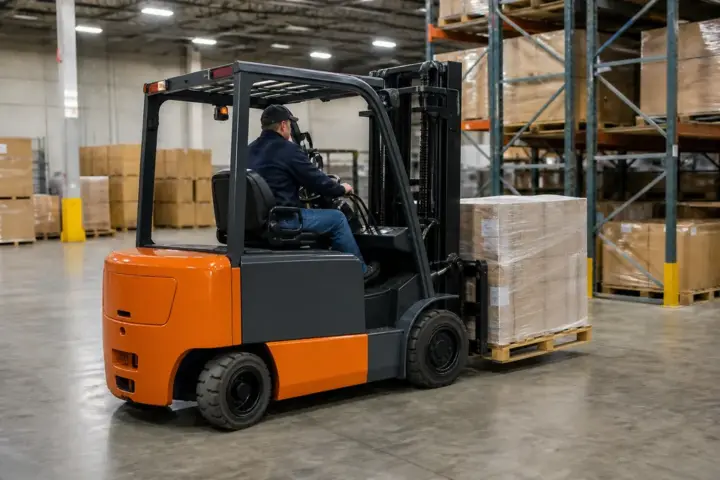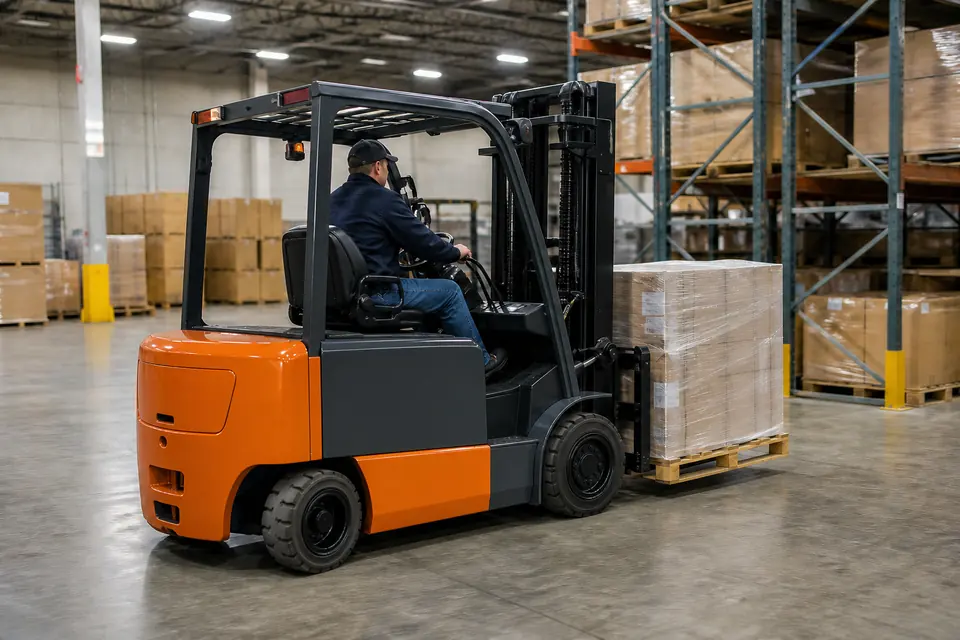
The lithium-ion versus lead-acid battery question is often treated as if one technology has already won. In actual forklift applications, the better choice depends on how the truck works: one shift or three, predictable breaks or continuous use, light warehouse travel or heavy production demand. A battery that looks expensive on the quote can be economical in a high-use operation. A less expensive traditional setup can still be the sensible choice for a truck that runs only a few hours a day.
We recommend starting with the operating schedule rather than the battery label. Document how many hours the truck is keyed on, how much time it spends lifting or traveling, where charging can occur, and how costly it is when that truck is unavailable. Those facts usually tell us more than a simple comparison of purchase prices.
The basic difference in day-to-day use
A conventional lead-acid forklift battery is a large industrial battery that also acts as part of the truck’s counterweight. It is a proven system with broad familiarity in the material-handling industry. Depending on the operation, it may be charged on a set schedule and allowed time to cool. Flooded designs also require watering, cleaning and attention to battery condition.
Lithium-ion systems are designed around a battery-management system and are commonly used with opportunity charging. Instead of waiting for a long uninterrupted charging window, an operator may plug in during breaks or shift changes when the equipment and charging plan are designed for it. The battery normally remains in the truck, eliminating routine battery changes in many applications.
That sounds automatically better, but the truck, battery and charger must be compatible. Electrical service, connector configuration, software communication, charging location and the battery’s approved weight all matter. This is equipment integration, not a drop-in consumer battery purchase.
Purchase price is only the first line of the comparison
Lithium-ion equipment often carries a higher initial battery and charger cost. Lead-acid can have a lower entry price, particularly in a straightforward one-shift application. The trouble comes when buyers stop the analysis there.
A fair comparison includes batteries, chargers, spare batteries if required, change equipment, battery-room space, electrical work, maintenance labor, watering supplies, ventilation considerations, energy use, expected replacement timing and downtime. If a multi-shift lead-acid operation needs multiple batteries per truck and a safe process for changing them, the gap can look very different from the first quote.
On the other hand, a lightly used forklift may never recover a large price premium through operational savings. If a truck moves pallets for two hours each morning and then sits, a well-maintained lead-acid setup may fit perfectly well. Total cost depends on utilization; it is not a slogan.
Charging habits can make or break either system
Lead-acid battery life is affected by how the battery is discharged, charged, watered and cooled. An operation with disciplined charging routines and trained staff can get dependable service. An operation where trucks are plugged in randomly, batteries are watered at the wrong time, and connectors are routinely damaged will have trouble regardless of what the spreadsheet predicted.
Lithium-ion can be more flexible about short charging sessions, which is valuable when breaks are predictable. But opportunity charging only works if chargers are located where operators will actually use them and the electrical infrastructure supports the plan. A charger placed across the facility from the work area may look fine on a drawing and fail in practice because the travel time discourages plugging in.
Before buying, map the normal workday in half-hour blocks. Note production peaks, meal periods, shift changes and times when the truck can realistically be parked. Then ask the supplier to show how the proposed battery state of charge is expected to behave through that schedule.
One-shift and multi-shift operations need different answers
In a one-shift warehouse with moderate use and a long overnight charging window, lead-acid remains a practical option. The truck can work during the day and charge when the building is quiet. Maintenance still matters, but the schedule is not fighting the battery.
In a two- or three-shift operation, the calculation becomes more interesting. Traditional battery changing may require spare batteries, a designated area, handling equipment and labor. Lithium-ion opportunity charging can reduce or eliminate some of that process if the duty cycle and charging windows support it. The value is not merely faster charging; it is keeping the truck available without managing a rotation of batteries.
High-use operations should also consider peak demand rather than average hours. A truck may average six hours a day over a month but run nearly continuously during shipping peaks. Size the energy plan around the demanding days, not the quiet ones.
Maintenance and housekeeping are real operating costs
Flooded lead-acid batteries require a maintenance routine. Watering, cleaning and inspection need assigned responsibility. Corrosion, damaged cables and poor housekeeping are not just cosmetic issues; they can shorten component life and create avoidable downtime. The labor may be handled internally or through a service arrangement, but it should appear somewhere in the cost model.
Lithium-ion batteries generally remove routine watering and reduce some battery-room tasks. They are not maintenance-free equipment in the broader sense. Connectors, cables, chargers and the truck still require inspection, and faults need proper diagnosis. Ask who can service the system locally and what happens if the battery-management system limits operation.
This is one area where a small difference in purchase price can distract from the larger issue. If nobody in the facility owns the battery-maintenance process, choose a solution and service plan that accounts for that reality rather than assuming habits will suddenly improve after delivery.
Infrastructure deserves an early site review
Charging equipment has voltage, phase, amperage and location requirements. Confirm the building’s electrical capacity before the trucks arrive. New circuits, panels, disconnects or charger mounting can affect both budget and timeline. An electrician should evaluate the proposed installation where required; a forklift quote is not a substitute for a facility electrical review.
Think about traffic flow as well. Chargers should not create cord hazards or force operators to park in an active aisle. Protect equipment from impact, provide appropriate clearance and make the connection convenient enough that the charging plan will be followed.
If the operation is changing from propane to electric, include all infrastructure work when comparing electric and propane forklifts. Fuel savings alone do not describe the complete transition.
Battery weight, capacity and truck compatibility
The battery can be part of the forklift’s counterweight system, so approved battery weight and dimensions matter. Do not assume any battery with the right voltage can be installed. The truck manufacturer or qualified supplier must confirm the permitted battery range, compartment dimensions, connectors and communication requirements.
Also keep the application itself in view. Battery choice does not fix an undersized truck. Load weight, lift height, attachment and load center still determine the required capacity. Review the forklift capacity fundamentals before narrowing the power package.
How to read battery warranties without guessing
Battery warranties can be structured around time, operating hours, energy throughput, retained capacity, maintenance requirements or a combination of terms. Ask what is covered, what is excluded, how claims are documented and who provides diagnosis. A long headline warranty is less useful if the operating conditions fall outside its terms or service is difficult to obtain.
For used electric forklifts, establish the age and condition of the battery instead of treating it as an accessory with no value impact. A truck with an unknown battery can become an expensive purchase shortly after delivery. That is one reason new versus used forklift prices should be compared using the complete power package.
A practical quote checklist
- Truck model, voltage and approved battery specifications
- Average and peak operating hours per shift
- Number of shifts and available charging windows
- Travel distance, lift activity and attachment use
- Battery capacity and expected usable shift coverage
- Charger type, quantity and charging locations
- Required electrical service and installation responsibility
- Spare batteries and change equipment, if applicable
- Maintenance tasks and who will perform them
- Warranty terms, service process and exclusions
- Freight, setup, training and commissioning
Give the same information to each supplier. Our guide to getting accurate forklift quotes can help organize the rest of the application details.
Frequently asked questions
Is lithium-ion always cheaper over the life of a forklift?
No. It can create meaningful value in high-use and multi-shift operations, but a lightly used truck may not recover the higher initial cost.
Can a lithium battery replace lead-acid in any electric forklift?
No. Compatibility, battery weight, dimensions, voltage, connectors, charger and truck communication must be approved for the specific equipment.
Do lead-acid forklift batteries still make sense?
Yes. They remain a practical choice for many one-shift and moderate-use applications with disciplined charging and maintenance.
How many chargers does a fleet need?
That depends on fleet size, battery capacity, charger output, shift pattern and available charging windows. Model the busiest operating period before deciding.
What should buyers compare besides the battery price?
Compare the complete installed system, maintenance, spare batteries, infrastructure, expected truck availability, warranty and local service support.
Review current electric forklift options, compare complete-system electric forklift prices, and get forklift quotes matched to your shift schedule and charging plan.